

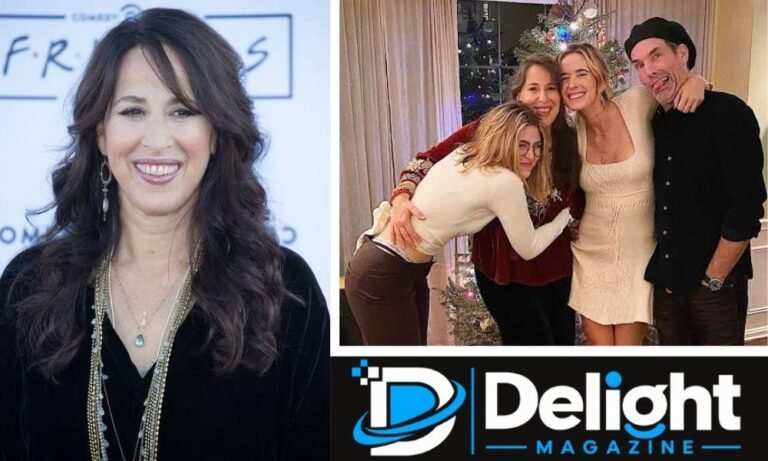
Maggie Wheeler did not need a long speech to become unforgettable. She needed one voice, one laugh, and one bold choice in a rehearsal room. Many fans know her as Janice from Friends, the loud, funny, and hard-to-ignore woman who kept walking back into Chandler Bing’s life. But the real story is bigger than one catchphrase. It is a story about timing, talent, and a small acting job that became a career-defining moment.
Maggie Wheeler came into Friends for what started as a single guest role. She did not know that Janice would become one of the most remembered recurring characters in the show’s history. What made the role special was not only the writing. It was also Wheeler’s instinct as a performer, especially the famous laugh that she created during rehearsal.
A Small Role That Became Something Bigger
In Hollywood, many actors accept guest roles because they are part of the job. A small role can lead nowhere, or it can open a new door. For Maggie Wheeler, Janice began as what she later described as a “one-shot” role, but the character returned again and again over the show’s ten-season run.
TIME reported that Wheeler was surprised every time the writers brought Janice back, and she saw the experience as joyful and unexpected. That makes her story useful for readers because it shows how one chance can grow far beyond its original size. Janice was not a main cast member. She was not in every episode. Yet she became part of the show’s memory because every appearance felt loud, funny, and impossible to forget.
The Moment the Laugh Was Born
The most interesting part of Maggie Wheeler’s Friends story is how Janice’s laugh was created. It was not planned as a huge pop culture sound. It came from a practical acting problem. Wheeler said the laugh happened naturally during the first rehearsal because Matthew Perry was so funny. She needed a way to laugh without breaking character, so she turned that reaction into Janice’s laugh.
This is why the story feels so human. She was not trying to create a viral moment, because viral moments did not even exist in the same way then. She was solving a live performance problem. That quick decision gave Janice a comic sound that fans still remember years later.
Why Matthew Perry Mattered to the Story
Matthew Perry’s performance as Chandler Bing was central to Janice’s success. Chandler’s dry humor worked well against Janice’s loud energy. Their scenes had a clear contrast. Chandler tried to hide from feelings, awkward moments, and uncomfortable truths. Janice walked into those moments with full force.
Wheeler said she knew Perry would make her laugh on set, so she created the Janice laugh as a kind of cover when he made her break. That small detail shows how comedy often depends on trust between actors. The best scenes are not only written on a page. They also grow from timing, reaction, and the way performers listen to each other in the moment.
Janice Was More Than a Funny Voice
It is easy to reduce Janice to a voice or a laugh, but that would miss why she worked. Maggie Wheeler gave Janice a complete comic identity. The voice was sharp. The laugh was strong. The energy was fearless. But Janice also had warmth. She was not just there to annoy Chandler. She was a woman who loved openly, spoke loudly, and seemed fully comfortable being herself.
TIME noted that some viewers even thought Wheeler’s Janice voice was her real voice, though Wheeler does not sound like the character in normal life. That shows how convincing the performance was. Wheeler did not only say funny lines. She built a full character with sound, movement, rhythm, and confidence.
The Power of a Catchphrase
Janice’s famous “Oh. My. Gawd!” became one of the most repeated lines connected to Friends. A catchphrase can be risky because it can turn a character into a joke machine. But with Janice, the phrase worked because it matched the character perfectly. It sounded like her. It felt like her. It entered the scene before she even did.
Fans knew what was coming when they heard that voice. The phrase also helped Janice stand out in a show filled with strong comic personalities. The six main characters already had clear voices and rhythms, but Wheeler found a way to make Janice feel just as memorable in much less screen time. That is not easy. It takes control, confidence, and a strong sense of comic identity.
The Art of Stealing a Scene Without Taking Over
One reason Maggie Wheeler became so memorable on Friends is that she knew how to be big without damaging the scene. Janice was loud, but she did not erase the main characters. Instead, her energy created conflict, surprise, and humor around them. That is a hard balance for a guest actor.
If the performance is too small, the character disappears. If it is too large, the scene can feel fake. Wheeler found the middle point. Janice was exaggerated, but she still fit inside the world of the show. This is why audiences accepted her returns. She brought chaos, but it was useful chaos. Her appearances gave Chandler new comic pressure and gave viewers a familiar surprise.
A Career Built Before Friends
Maggie Wheeler’s success as Janice did not come from luck alone. She already had acting and voice experience before Friends. Her official biography says she was born and raised in New York City and began professional work as a voice-over artist. It also notes that she worked on radio spots and later voiced characters for animation projects, including work connected to Rankin/Bass.
This background matters because Janice is, in many ways, a voice performance as much as a live-action role. Wheeler understood how sound can shape character. She knew that a voice could carry personality, humor, and emotion. That experience helped her turn Janice from a written part into a living comic presence.
Why Voice Work Helped Her Create Janice
Voice actors learn how to make a character clear without needing a full physical performance. They use pitch, rhythm, pauses, and breath. Maggie Wheeler brought that skill into Friends. Janice’s voice was not just nasal or loud. It had a rhythm that told the audience who she was. She sounded confident.
She sounded excited. She sounded impossible to ignore. That made her funny before the joke was even finished. Wheeler’s animation and voice-over background helped her understand this. Her official biography says animation was her “first love,” and it lists many voice roles across television and film. Janice worked because Wheeler treated sound like character design. The laugh, the voice, and the catchphrase all became part of one clear comic shape.
The Industry Lesson Behind Her Breakthrough
The Maggie Wheeler story also gives a strong lesson about the entertainment industry. Sometimes, a role becomes important because an actor brings more to it than what is written. Writers create the structure, but actors add breath, timing, and surprise. Janice shows how a guest part can become bigger when the performer makes a brave choice. Wheeler could have played Janice in a normal voice.
She could have made the laugh smaller. She could have treated the role as a short job and moved on. Instead, she made bold decisions that gave the character a signature. This does not mean every actor can turn one episode into ten years of fame. But it does show why preparation and instinct matter.
Fame Can Follow One Memorable Detail
Many actors work for years before the public connects them with one character. For Maggie Wheeler, Janice became that character. This can be both a gift and a challenge. The benefit is clear. A memorable role can keep an actor in public memory for decades. It can bring interviews, fan love, and a place in television history. The challenge is that people may forget the rest of the actor’s work.
Wheeler has appeared in many other shows, and her official biography lists credits including Everybody Loves Raymond, Seinfeld, Ellen, Will & Grace, The X-Files, Curb Your Enthusiasm, and more. Still, Janice remains the role most casual viewers know first. That is the strange power of a breakout character.
Life Beyond Janice
One of the best reasons to write about Maggie Wheeler is that her story does not stop with Friends. She has also built a creative life around music, singing, and community. Her official biography says she directed the Golden Bridge Community Choir in Hollywood for 17 years and continued choir work online through virtual concerts and gatherings.
TEDx Manhattan Beach also describes her as a singer, songwriter, choir director, and workshop facilitator who has taught vocal work for many years. This gives her public image more depth. Fans may know her laugh first, but her wider career shows a person who has spent years exploring voice in many forms. Acting, comedy, voice-over, and singing all connect through sound.
Why This Story Still Connects With Fans
Maggie Wheeler’s Janice still connects with fans because the character feels instantly recognizable. Everyone knows someone who enters a room with too much energy. Everyone has seen a relationship that keeps returning after it should be over. Everyone understands the awkward comedy of trying to avoid someone who keeps showing up. Janice turned those social feelings into a funny television character.
But the deeper reason she lasted is that Wheeler made her joyful. Janice was not ashamed of herself. She did not shrink to make Chandler comfortable. She laughed loudly, loved loudly, and left a mark. That kind of character stays with audiences because she is comic but also strangely freeing. She reminds viewers that being memorable is not always the same as being perfect.
Final Thoughts
Maggie Wheeler became a Friends legend because she did something many great comic performers do. She took a small opening and filled it with life. Janice could have been a simple guest character, but Wheeler gave her a voice, a laugh, and a presence that fans never forgot. The laugh began as a practical way to handle Matthew Perry’s humor during rehearsal, but it became one of the most famous sounds in the show.
Her story is not just about luck. It is about preparation, instinct, timing, and courage. Maggie Wheeler proved that one creative choice can change the direction of a role. Sometimes, one episode is not just one episode. Sometimes, it is the start of ten years of television history.
