

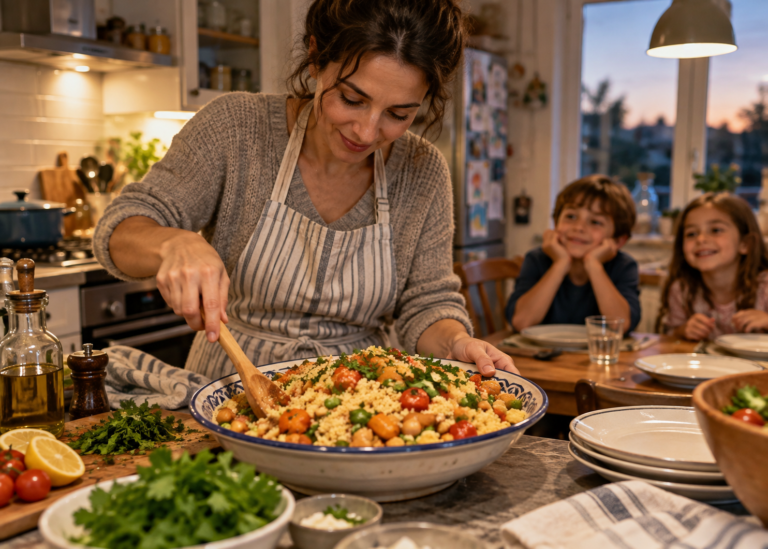
A busy parent often faces the same problem every evening. Work is finished, but home work begins. Children are hungry. The kitchen feels messy. Everyone wants food now, not one hour later. This is where Kouskousi can become useful. The word is often linked with couscous and other small Mediterranean wheat-based foods. Couscous itself is made from small granules of semolina and is widely connected with North African food traditions. UNESCO also recognizes the knowledge and practices of making and eating couscous as an important cultural heritage shared by Algeria, Mauritania, Morocco, and Tunisia.
For a normal family, the value of Kouskousi is not only history. Its real value is speed, comfort, and flexibility. A parent can build a full meal around it without using too many pans or expensive ingredients. It can sit under vegetables, chicken, beans, lentils, fish, or stew. It can also work as a warm side dish when the main food is simple. This makes it helpful for people who want dinner to feel homemade but do not have time for slow cooking every night.
The story is easy to imagine. A mother or father reaches home after a long day. One child wants something soft. Another wants something with sauce. The parent checks the fridge and sees carrots, peas, tomatoes, onions, and maybe leftover chicken. Rice may take longer. Pasta may feel too heavy again. Kouskousi gives another option. With hot water or broth, vegetables, and light seasoning, dinner can come together fast. It does not need to be fancy to feel complete.
Why Kouskousi Works for Busy Family Nights
Kouskousi works because it is a base food. A base food is something that can carry many flavors. Rice does this. Pasta does this. Potatoes do this. Kouskousi can do the same job, but often with less stress. It can be mild, so children may accept it more easily. It can also be mixed with stronger flavors for adults. Lemon, olive oil, garlic, tomato sauce, herbs, chickpeas, or roasted vegetables can all change the final taste.
This is important because family dinners are rarely perfect. One person may want meat. Another may want vegetables. Someone may be tired of sandwiches. A simple Kouskousi bowl can solve that problem. The base stays the same, but toppings can change. Parents can place cooked vegetables, sauce, boiled eggs, grilled chicken, or beans on the table. Each person can take what they like. This lowers stress because the parent is not cooking five separate meals.
A Simple Food With Cultural Depth
Kouskousi should not be treated only as a quick modern food. Its wider food family has deep roots. Couscous is strongly tied to North African homes, family gatherings, and shared meals. UNESCO describes couscous traditions as connected with solidarity, sharing, and togetherness. That matters because food is not only fuel. Food also teaches children how families sit together, talk, and respect simple ingredients.
At the same time, modern homes do not always have time for traditional steaming methods. Many families use instant couscous or similar small grain products because they are faster. This is not the same as a slow traditional meal, but it can still carry the spirit of family cooking. A parent can respect the idea of a shared dish while using a modern method that fits a busy schedule.
Affordable Ingredients Make It Practical
Another benefit of Kouskousi is cost control. A family dinner does not always need expensive meat or branded sauces. A good meal can start with a simple grain base, then add vegetables and protein. Chickpeas, lentils, beans, eggs, and leftover chicken can help make the dish filling. Frozen vegetables can also work when fresh vegetables are not available or cost too much.
This is helpful for parents who plan weekly meals. One packet of Kouskousi or couscous-style grains can support several meals. Monday can be vegetable Kouskousi. Tuesday can be chicken and tomato Kouskousi. Wednesday can be a lunchbox salad with cucumber, herbs, and lemon. This makes one ingredient useful in many ways. It also reduces waste because leftover vegetables can be used before they spoil.
Portion Control Becomes Easier
Many parents struggle with portion sizes. Too much rice or pasta can make a meal heavy. Too little food can leave children hungry again after one hour. Kouskousi helps because it can be measured before cooking. A parent can prepare enough for the number of people at the table, then add vegetables to increase volume. This makes the plate look full without depending only on the grain.
A balanced plate can include Kouskousi, vegetables, and protein. For example, one bowl may have Kouskousi, carrots, peas, chickpeas, and a spoon of yogurt sauce. Another bowl may have Kouskousi, tomato stew, and small pieces of chicken. This style is simple, but it feels complete. It also teaches children that dinner can be colorful, not just brown, white, or fried.
Kouskousi Helps With Meal Planning
Meal planning does not have to be strict. It can be as simple as choosing three base foods for the week. One night can be rice. One night can be potatoes. One night can be Kouskousi. This gives the family variety without making the parent learn a new recipe every day. Kouskousi fits well in this plan because it can be used with many pantry items.
A parent can prepare a small “dinner kit” in advance. Keep Kouskousi in the cupboard. Keep canned chickpeas, tomato paste, dried herbs, and frozen vegetables ready. When the evening becomes busy, the parent already has a path. There is no need to panic or order food quickly. The meal may not be perfect, but it will be warm, simple, and useful.
Traditional Cooking vs Modern Convenience
There is a clear difference between traditional preparation and modern convenience. Traditional couscous is often steamed carefully and served with rich stew. It can be part of family gatherings and cultural events. Modern instant versions are usually faster and easier for daily use. Both have their place. One is about heritage and deeper flavor. The other is about saving time on a school night.
The best approach is not to shame busy parents. A working parent may not have time to follow every traditional step. That does not mean the food has no value. A simple Kouskousi dinner can still bring the family to the table. It can still include vegetables. It can still reduce the need for fast food. For many homes, that is already a success.
Easy Dinner Ideas With Kouskousi
A simple Kouskousi dinner can start with hot broth instead of plain water. Broth adds flavor without much effort. Then the parent can mix in cooked vegetables, olive oil, lemon juice, and herbs. For protein, chickpeas are one of the easiest options. They are soft, mild, and quick to use. Chicken, tuna, eggs, lentils, or grilled paneer-style cheese can also work depending on the family’s taste.
For children, keep the first version mild. Use peas, carrots, butter or olive oil, and a little salt. For adults, add chili, black pepper, garlic, parsley, or tomato sauce on the side. This keeps one meal flexible. The parent does not need to cook separate dishes. Everyone starts with the same base, then adds flavor as needed.
A Better Choice Than Last-Minute Junk Food
Many families do not choose fast food because they are lazy. They choose it because they are tired. When there is no plan, no cooked food, and no energy, ordering food feels easy. Kouskousi can help because it gives parents a fast backup meal. It is not a magic solution, but it can reduce last-minute stress.
A quick homemade dinner also gives parents more control. They can choose less oil, more vegetables, and better portion sizes. They can avoid making dinner too salty or too heavy. Most importantly, they can feed the family without turning every busy night into an expensive night. Over time, that can help both health and budget.
Final Thoughts
Kouskousi is useful because it meets real family needs. It is simple, flexible, and easy to pair with affordable ingredients. It can connect to Mediterranean and North African food traditions, but it can also serve modern homes that need fast dinner ideas. For the busy parent, the main benefit is not perfection. The benefit is having one reliable food that can turn vegetables, leftovers, and pantry items into a warm family meal.
In the end, Kouskousi shows that dinner does not have to be complicated to be meaningful. A simple bowl can still bring people together. It can save time, reduce stress, and help children eat more balanced meals. For families with long days and hungry evenings, that is why Kouskousi can make dinner easier.
