

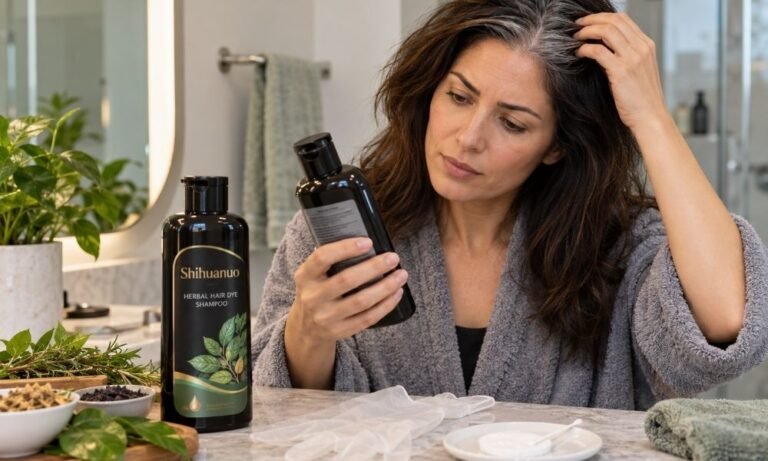
Shihuanuo has become a searched name because many people want a faster way to cover gray hair at home. The brand is best known for a 3-in-1 hair dye shampoo that is marketed to color, clean, and condition hair in one step. That sounds simple. It also sounds less scary than a traditional box dye kit with mixing bowls, strong smells, gloves, stains, and a long waiting time.
For busy people, this kind of product can feel like a small beauty shortcut. But when a hair product says “herbal,” “ammonia-free,” or “gentle,” shoppers still need to slow down and ask the right questions. Hair dye touches the scalp, skin, and hair roots. So the real story is not only about convenience. It is also about trust, safety, and clear product information.
The Promise Behind Shihuanuo Hair Dye Shampoo
The main promise of Shihuanuo is easy gray hair coverage. Instead of using a separate shampoo, conditioner, and color product, users apply one shampoo-style product and rinse it out after the suggested time. Trendify Magazine describes Shihuanuo as a Chinese hair care brand known for its 3-in-1 Hair Dye Shampoo, made for people who want an easier way to cover gray hair at home.
The same source says many formulas are promoted as ammonia-free and may include plant-based ingredients like ginseng, camellia, macadamia oil, and Ganoderma. This is the kind of wording that attracts people who want hair color without a harsh salon experience. But words on the front label are only the start. The back label matters more.
Why “Herbal” Sounds Safer Than It Always Is
The word “herbal” has emotional power. It makes people think of plants, nature, old remedies, and softer beauty care. That does not mean herbal ingredients are fake or useless. Some plant oils and extracts may help hair feel smoother, softer, or more conditioned. The problem is when shoppers treat the word “herbal” like a full safety guarantee.
A product can contain plant extracts and still contain dye agents, preservatives, fragrance, or other ingredients that may bother sensitive skin. This is the hidden risk behind many beauty claims. The label may highlight the nicest sounding ingredients while the most important safety details stay in small print. With Shihuanuo, the smart question is not “Is it herbal?” The better question is “What is the full ingredient list on the exact product I am buying?”
The Ammonia-Free Message
Many buyers also feel safe when they see “ammonia-free.” That phrase matters because ammonia has a strong smell and is often linked with the harsher feel of some permanent hair dyes. Shihuanuo is often described as an ammonia-free option, and that can make it attractive to people who dislike the smell and process of normal hair dye. But ammonia-free does not automatically mean risk-free.
A hair dye still needs coloring agents to change the look of hair. It may also use other ingredients to help the formula work. So the safety question does not end when ammonia is missing. A buyer still needs to check for possible allergens, follow directions, and avoid using the product on damaged or irritated skin.
Hair Dye Allergies Are a Real Concern
Hair dye allergies are not just a small internet rumor. The U.S. Food and Drug Administration says one hair dye ingredient, paraphenylenediamine, also called PPD, has been more strongly linked with allergic reactions. The FDA also tells people to do a skin patch test every time before dyeing hair. This advice matters even when a product looks mild, natural, or familiar.
A person can use hair dye once with no problem and still react later. Some reactions can be mild, such as itching, redness, or burning. Others can be more serious and may need medical help. This is why “I used hair dye before and nothing happened” is not enough protection.
Why Patch Testing Should Not Be Ignored
A patch test is easy to skip because it feels boring. Many people want fast results, especially when gray roots show before a meeting, wedding, party, or family event. But this small step can prevent a much bigger problem. The American Academy of Dermatology advises people to test store-bought hair color before using it.
If a reaction happens, people should not dye their hair and should speak with a dermatologist for further allergy testing. This is important for Shihuanuo users too. A patch test does not make every risk disappear, but it gives the user a safer first check before applying the product across the scalp.
The Real Consumer Safety Problem
The real controversy around herbal hair dye shampoos is not only about one brand. It is about how beauty products are sold online. Many shoppers see attractive claims first: herbal, gentle, easy, natural-looking, ammonia-free, fast, and safe for home use. But they may not see the full formula, the seller’s details, the exact country version, or clear allergy warnings until after buying.
Some listings may use the same brand name but show different package designs, different ingredient details, or different claims. This creates confusion. A buyer may think they are researching one Shihuanuo product, but the actual bottle they receive may be a different shade, batch, or formula. That is why ingredient transparency is not a small issue. It is part of consumer safety.
Cosmetic Claims Need Careful Reading
In the United States, cosmetic products and ingredients usually do not need FDA approval before they go on the market, although companies are responsible for making sure their products are safe. This matters because many people think a beauty product must be approved before sale.
Hair dyes also have specific rules and warnings, especially for certain color additives. The FDA says coal-tar hair dyes may stay on the market when labels include the required caution statement and proper directions for a skin test. This does not mean every product is dangerous. It means the buyer must read instructions carefully instead of trusting front-label marketing alone.
Where Shihuanuo May Help Some Users
It would be unfair to discuss Shihuanuo only through fear. The product idea can be useful for the right person. A shampoo-style dye may help people who want simple gray coverage without a long salon visit. It may also appeal to people who want a softer-looking fade instead of a strong root line.
Trendify Magazine says Shihuanuo products are generally described as semi-permanent, meaning the color fades over time instead of staying like permanent dye. This can be a benefit for people who want a lower-commitment color routine. The 3-in-1 format may also save time because it combines coloring, cleansing, and conditioning steps.
The Limitations Buyers Should Expect
Still, simple does not mean perfect. Shihuanuo may not give the same result for every person. Hair texture, natural color, gray percentage, previous dye history, water quality, and washing habits can all affect results. A person with a few gray hairs may get a smoother blend than someone with a high amount of gray hair. Someone with treated or damaged hair may see uneven color.
A person expecting salon-level permanent coverage may feel disappointed if the color fades in a few weeks. These limits do not make the product bad. They mean buyers should understand what a semi-permanent hair dye shampoo can and cannot do before using it.
How to Read the Label Before Buying
Before buying Shihuanuo, shoppers should treat the label like a safety document, not just a beauty promise. They should look for the full ingredient list, directions, allergy warning, shade name, usage time, manufacturer or distributor details, batch information, and return policy. If the product listing only shows big claims and no clear ingredient list, that is a reason to pause.
Buyers should also compare the online listing with the actual package when it arrives. If the package looks different from the listing, or if the label is unclear, it is better not to rush. A low price is not useful if the buyer cannot understand what is going on their scalp.
Who Should Be Extra Careful
Some people should be more careful with any hair dye shampoo, including Shihuanuo. This includes people with sensitive skin, eczema, scalp wounds, past hair dye reactions, strong fragrance sensitivity, or known allergies to dye ingredients. People who recently used chemical treatments, relaxers, bleach, or other strong hair products should also be careful because the scalp and hair may already be stressed.
If the scalp is burning, itching, cracked, or inflamed, it is better to wait and speak with a professional. Hair color is cosmetic. It should not come before skin health. A fresh look is not worth days of pain, swelling, or irritation.
A Balanced Way to Talk About Shihuanuo
The fair way to describe Shihuanuo is simple: it is a convenient hair dye shampoo with strong marketing appeal, but it should be used with the same caution as any hair coloring product. The herbal message may be attractive. The ammonia-free claim may be useful for some buyers.
The 3-in-1 format may save time. But none of these points removes the need for a patch test, full label reading, and careful use. Consumers should not assume that “natural” means allergy-free. They should not assume that “gentle” means safe for every scalp. And they should not assume that every online listing gives complete product information.
Final Thoughts
Shihuanuo is popular because it offers something many people want: an easier way to cover gray hair at home. That benefit is real for some users. But the hidden risk is the way beauty marketing can make a product feel safer than the label proves. Herbal ingredients can sound comforting, but they do not replace safety steps. Ammonia-free formulas can be appealing, but they do not guarantee that no reaction will happen.
The smartest buyer is not the most fearful buyer. The smartest buyer is the one who checks the exact product, reads the ingredients, follows the directions, performs a patch test, and stops using the product if irritation begins. Shihuanuo may fit into a simple home hair care routine, but only when convenience does not replace caution.
